Block paving driveways
Hard-wearing block paved driveways for Sale, Trafford and South Manchester homes, laid on a properly compacted base with firm edges so they stay flat.
Why choose block paving?
Block paving is still one of the most popular driveway surfaces around Sale and Trafford. It is very strong, it suits both period and modern houses, and because it is made of individual units it can be lifted and re-laid if you ever need access underneath. The trade-off is that it needs a well-built base and some upkeep of the joints.
Block options
- Standard concrete block: crisp, clean lines in a range of colours, often with a contrasting border
- Tumbled or tegula-style block: softened edges for a more traditional, aged look that suits older houses
- Permeable block paving: wider joints and an open-graded base so rain drains through the surface
- Borders and bands: block borders also work well with resin and tarmac drives
How we lay a block paved driveway
- Excavation to the right depth for vehicles, with the spoil taken away
- Sub-base: a crushed stone sub-base (typically Type 1) laid in layers and compacted, not just tipped and levelled
- Edge restraints: kerbs or edge blocks set in concrete so the paving cannot spread
- Laying course: a screeded bed of sharp sand, then the blocks laid in your chosen pattern (usually herringbone for driveways)
- Cutting in around edges, covers and thresholds, then jointing with kiln-dried sand and compacting with a plate compactor
- Drainage: falls away from the house, and a channel drain where needed. See driveway drainage
Block paving vs resin vs tarmac
Block paving gives you pattern and colour, and it is easy to repair in sections. Resin-bound is smoother and permeable, with no joints to weed. Tarmac is usually the most cost-effective, especially on long drives. Many of our jobs combine them, for example tarmac or resin with a block paving border. We are happy to price options side by side.
Block paving on our jobs
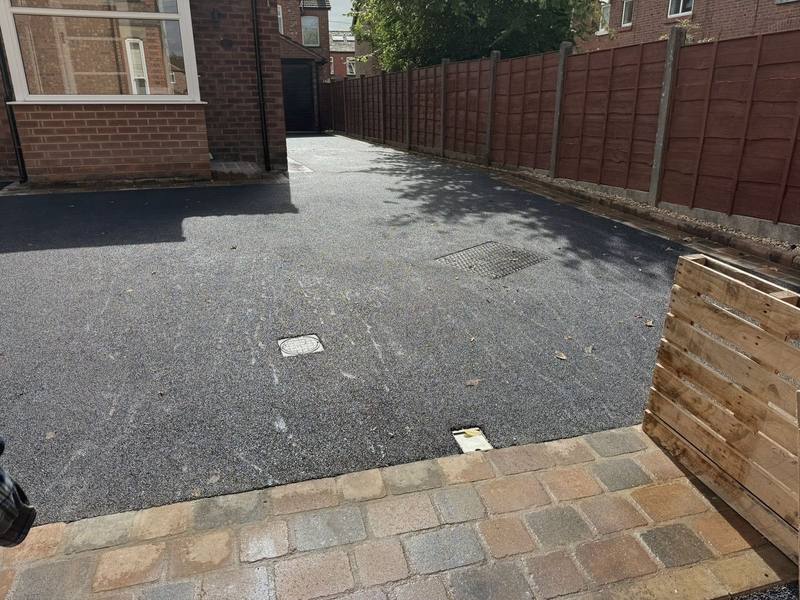
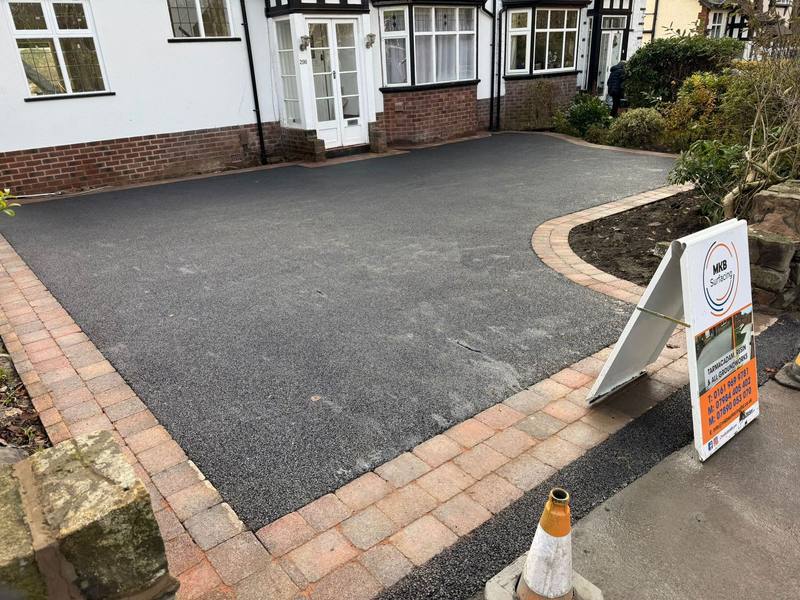
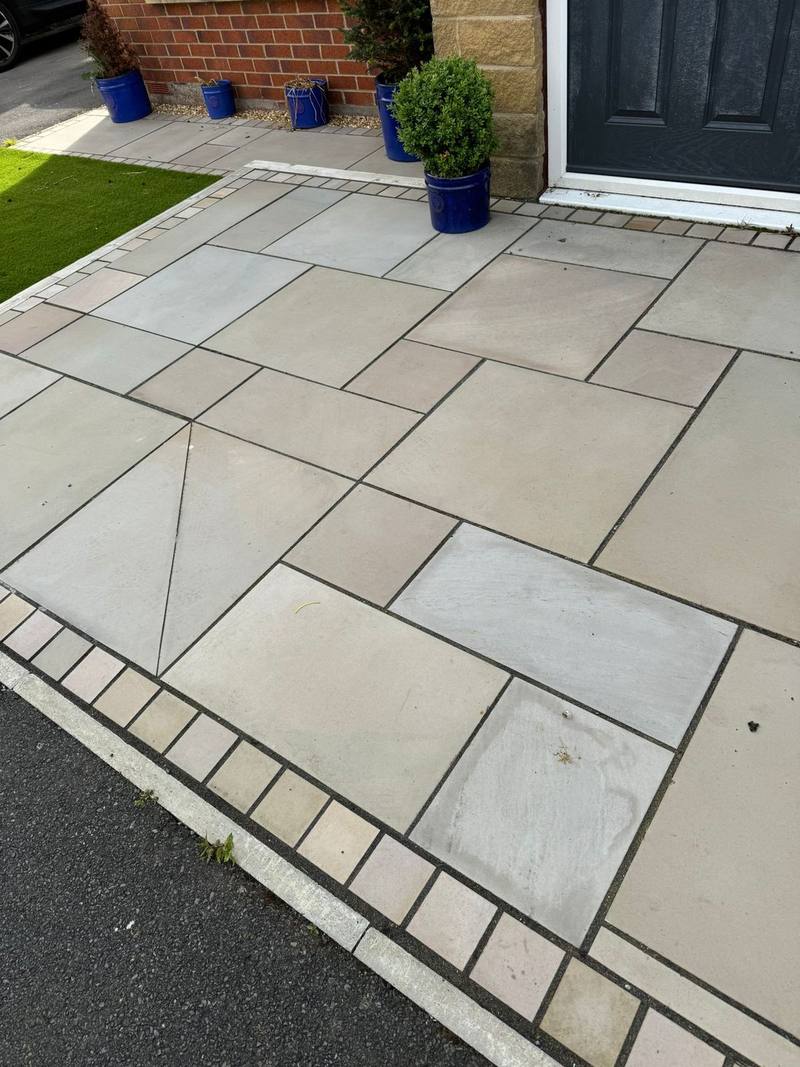
Block borders, bands and paving from real MKB Surfacing jobs. See the gallery for more.
Block paving questions
What is the best laying pattern for a block paved driveway?
For driveways, a herringbone pattern (laid at 45° or 90°) is the usual recommendation because the interlock resists cars turning and braking. Stretcher bond and basketweave suit paths and patios better.
Is block paving permeable?
Standard block paving is not treated as permeable, so it needs falls and drainage. Permeable block paving has wider joints filled with fine grit over a special open-graded base, so water drains through. That helps with the front garden 5 m² rule.
How do I stop weeds in block paving?
Most weeds grow from seeds landing in the joints, not from below. Keep the joints full of kiln-dried sand, sweep regularly and deal with weeds early. An optional sealer can help lock the jointing sand in.
Can damaged blocks be replaced?
Yes. One of the big advantages of block paving is that individual blocks can be lifted and re-laid. That is useful after drainage or utility work, or if a block is stained or cracked.
More answers on our driveway FAQs page.
Thinking about block paving?
Tell us the size of the drive and the look you want. We will come out, measure up and quote for free.
