
Driveway drainage & soakaways
Standing water, puddles by the garage and run-off onto the pavement are usually drainage problems, not surface problems. This page covers how we design water away from your home.
Good drainage starts with the levels
Every hard surface needs a plan for where the rain goes. On a sealed surface such as tarmac or standard block paving, that means a gentle fall across the drive, away from the house and garage, to a point where the water can be collected or soaked away. Too little fall and puddles form. The wrong direction and water ends up at your front door or garage.
We also keep the finished surface safely below your damp-proof course. Building guidance generally recommends at least 150 mm. A new drive laid too high is a common cause of damp problems.
Drainage options we use
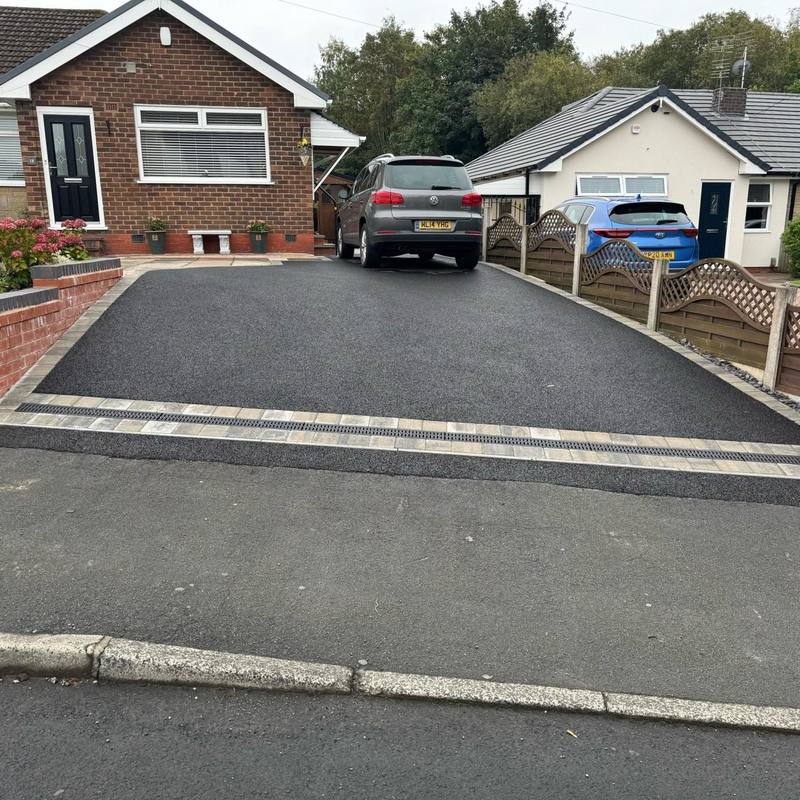
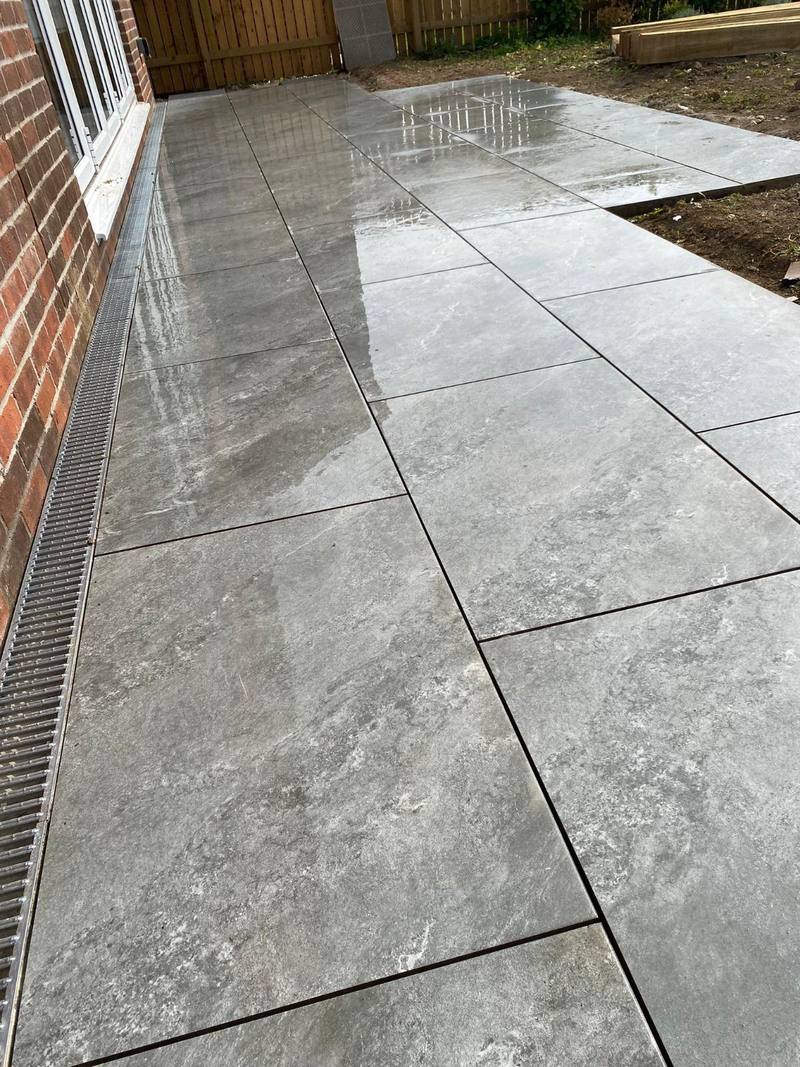
- Linear channel drains across the drive at thresholds, garage doors and the bottom of slopes
- Soakaways (crate or rubble-filled) to let collected water soak into the ground within your property, sized to suit the ground
- Permeable surfaces such as resin-bound on a porous base, or permeable block paving, so water drains through the surface itself
- Directing water to a lawn or border on your property where the layout allows it
The front garden 5 m² rule
In England, paving over more than 5 m² of a front garden with a traditional impermeable surface that drains onto the road needs planning permission. You normally do not need permission if the surface is permeable or the water drains to a permeable area within your property. It is simple to design for from the start, and it helps reduce local surface-water flooding.
Groundworks behind the drainage
Drainage is part of our wider groundworks: excavation, sub-base, edge restraints and site preparation. If you already have a drive with standing water, we can look at whether the levels can be corrected or the base needs rebuilding.
Drainage details from our jobs
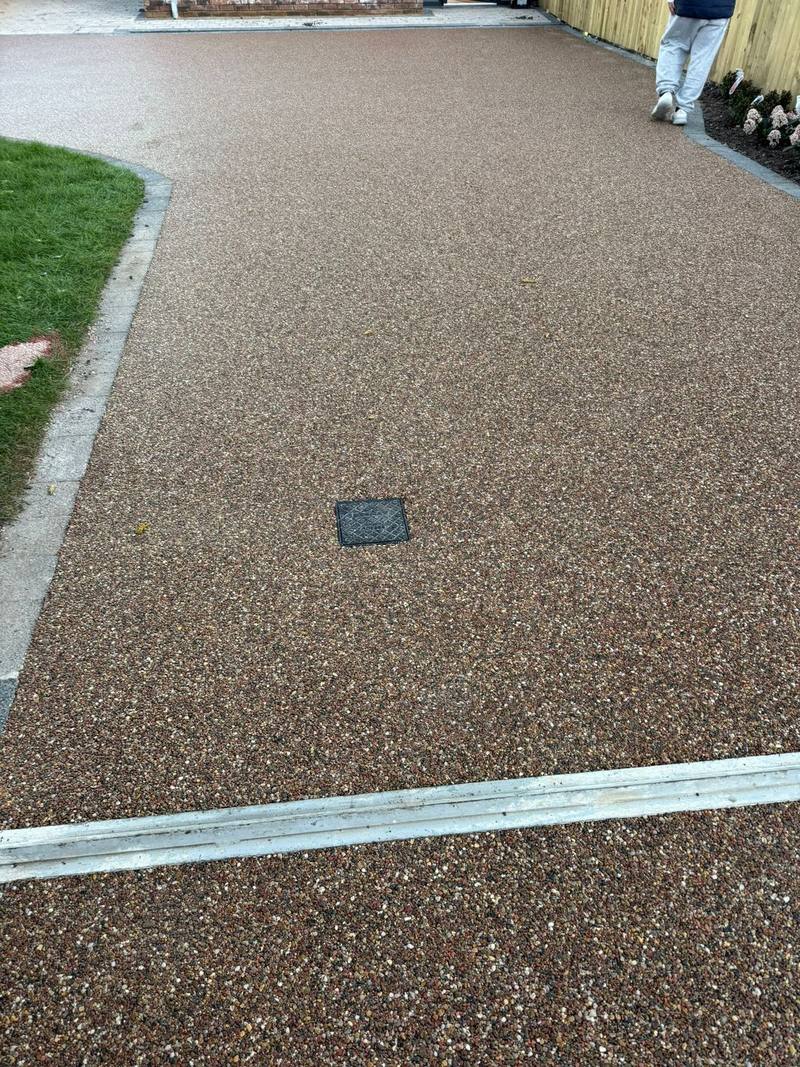
Channel drains, recessed covers and falls on real MKB Surfacing jobs.
Drainage questions
Why is water pooling on my driveway?
Common causes are falls that are too shallow or run the wrong way, a sub-base that has sunk in places, or water with nowhere to go at the low point. The fix is to correct the levels and add drainage, not just resurface.
Can I connect my driveway drain to the sewer?
Not without approval. Surface water should normally go to a soakaway or permeable area first. Connecting to a public sewer needs permission from the water company, which is United Utilities in this area.
Do resin driveways need drainage?
Resin-bound is permeable, but only if it sits on a permeable base and the water can get away underneath. Laid over old sealed tarmac or concrete, the water runs off the surface instead, so falls and a channel may still be needed.
How big does a soakaway need to be?
It depends on the area draining into it and how quickly your ground absorbs water. It should be sized from a percolation test, not guessed. Clay-heavy ground drains slowly, and a soakaway may not suit it at all.
More answers on our driveway FAQs page.
Got water sitting on your drive?
Send us a photo on WhatsApp or call 07890 053070. We will tell you honestly what is causing it.
